

The More You Grow: Growing & Harvesting Beets


"How do you make a salad rap?
By adding a good beet!"
When I was growing up, I remember loving a lot of veggies. I would eat just about any vegetable (barring onions), especially if it came right out of a garden. Beets, however, were an exception. For some reason, they just didn't seem appetizing to me. My Grandma and Grandpa grew them in their garden, and my Grandma canned them. My Dad LOVED them (and he wasn't a fan of veggies)! I can't really pinpoint the reason for my distaste, but if I had to guess, beets just get a bad rap and I bought into it!
Boy was I WRONG. It took me years into adulthood to truly appreciate beets and their many benefits! You really can't "beet" them!

Beets are a root vegetable that grow alongside the other cold crop plants. The cooler weather helps keep the beetroot sweet. When the temperature outside gets hot, they tend to lose that sweetness. They are planted mid-March, and are usually ready to harvest anywhere from the end of May to the first week of June. You can also plant them again in August for a Fall crop, or about 6 weeks before the first Fall frost in your area.
I shared in my post on 4 Quick and Easy Tips on Canning about the reason why we began growing beets in the first place. It's a funny story if you have a second to click over there and read it.

We quickly learned that beets were going to be a staple in our garden every single year, for both their nutritional benefit and their low-maintenance growth.
Beets begin as seed planted in a furrow about 2 inches apart. You can plant them a bit further apart if you've got the space, but keep in mind the bigger they get, the tougher and more bitter they will be with a pretty woody texture. Ours are typically about 2-3" in diameter when we pull them from the ground. Anything bigger than that won't be nearly as sweet, nor as tender.

Several health benefits come with the consumption of beets, too! They are great for cardiovascular and heart health by enhancing blood flow and helping to lower LDL cholesterol. They are also a great source of fiber and potassium! Beets are "beet red" because of the betalains, a natural pigment found in plants, that contain both antioxidant and anti-inflammatory properties. Those properties help lower risk of a whole host of diseases caused by ongoing inflammation! (source)

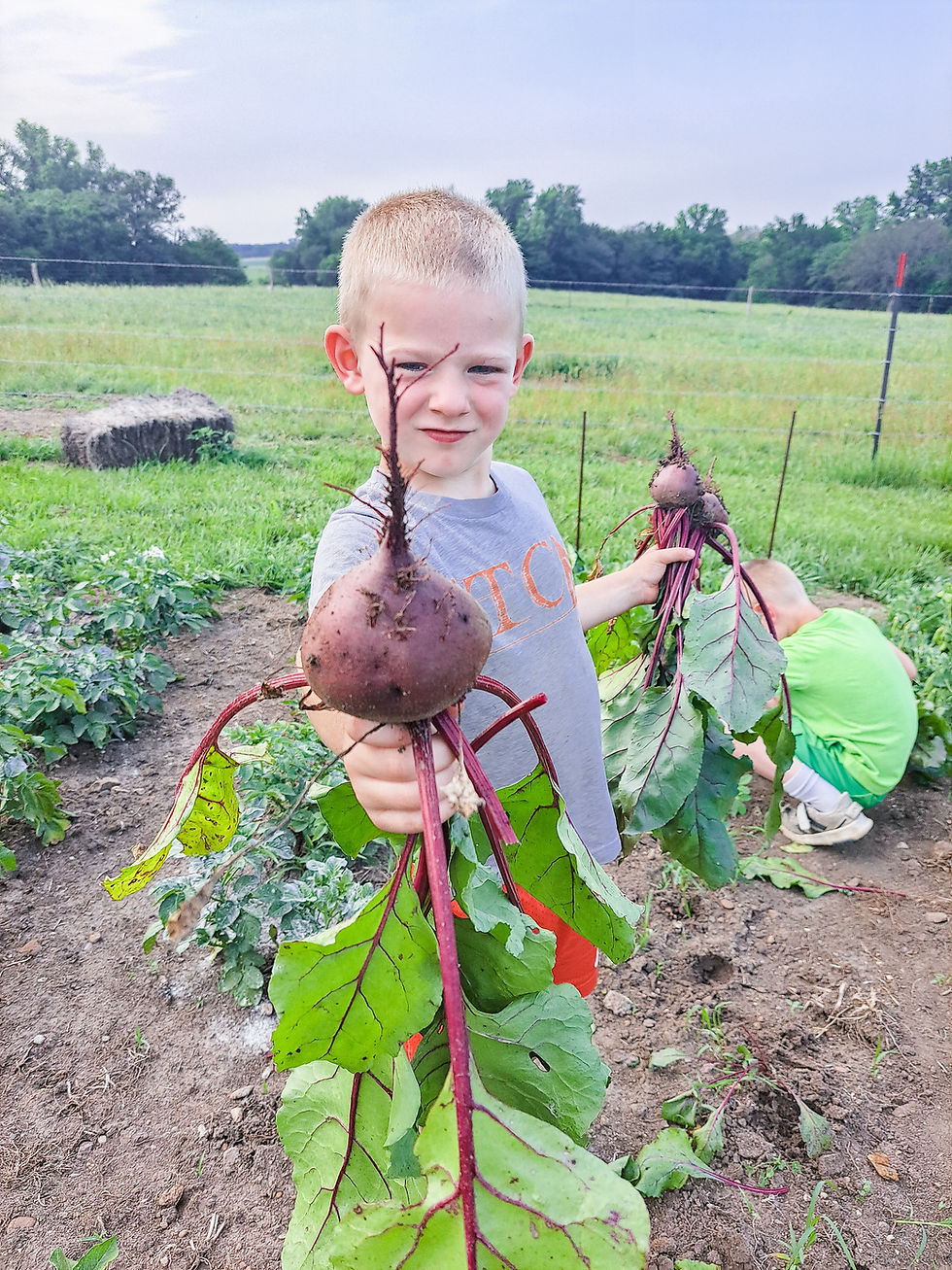
It is pretty incredible the way God created foods for us that naturally battle against certain diseases and give us good nutrition at the same time. When we harvest our beets, we are ready to pickle them. By doing this, we get to enjoy them all year long! You can find our process for that in my post: The BEST Canned Pickled Beets.


Comments